
ResearchSlop
Will Academic Publishing Drown in AI-Assisted Mediocrity?

The world is abuzz with “workslop” AI-generated drivel posing as real, quality work. Workslop is inevitable as people learn to use AI in their workplace. While I have many thoughts about the reasons for workslop, I am more interested in the way the same problem hits research. Let me try to define: “ResearchSlop” as drivel or derivative work that poses as real quality work worthy of publication, while in fact it offers nothing new and no argument answering the “so what?” question.
Why is ResearchSlop here?
I have discussed this before, but essentially it boils down to three self-reinforcing incentives that are NOT new.
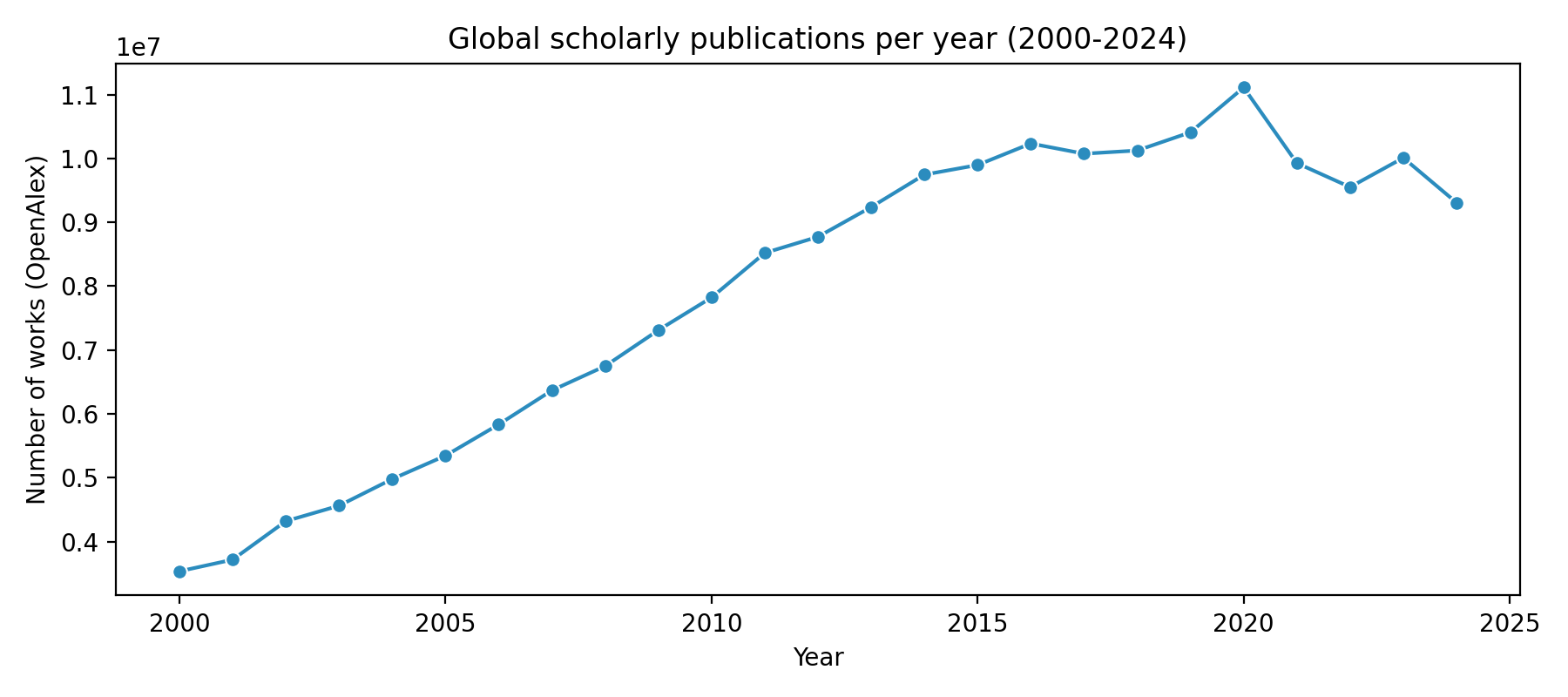
More academics are working across the world, and they are incentivized to publish for academic promotion and, in some cases, direct monetary gains. The graph shows that we have climbed from 3 million papers in 2000 to 11 million in 2020. The graph shows that the expansion is not driven by AI but actually precedes it considerably. Moreover since AI it seems to have slowed.
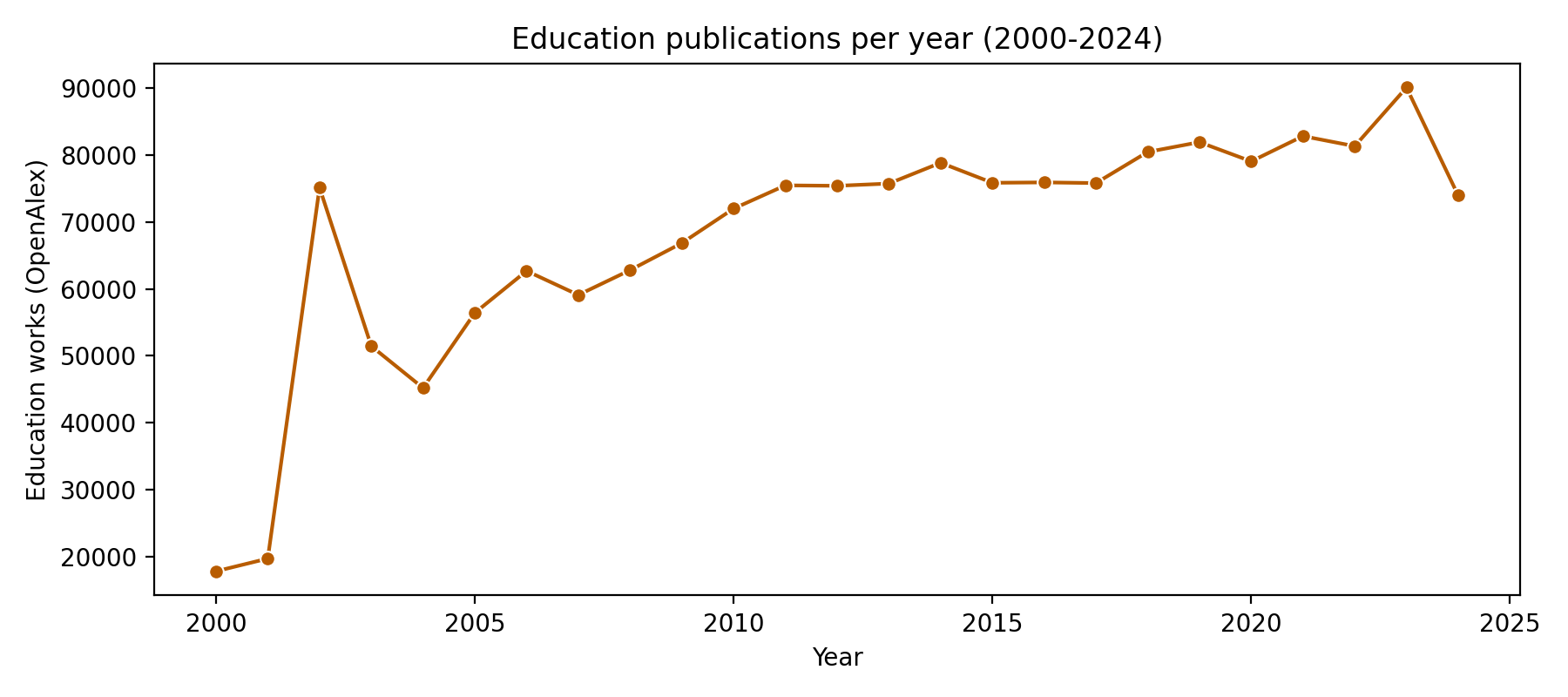
In education, the picture is very similar. The numbers climbed from around 20,000 a year when I graduated with my PhD, peaking at 90,000 in 2023—no wonder I have been progressively frustrated by my inability to read deeply in my field.
To address the pressure on academic publishing, new publishers (and established ones) have developed for-profit arms that charge authors, rather than users. For example the top academic publisher Springer, published 2,962 different journals in 2022!
Degradation of the peer review process since it is unrewarded, overwhelmed by the number of papers, and further deteriorated by short review times. A paper by Drodz and Ladomery (2024) articulated it well: “As such, researchers spend increasing amounts of time working on primary research and writing papers, which means that less time can be devoted to peer review. This in turn increases the burden on other reviewers, leading to a cycle of increasing author pressure and reviewer fatigue.”
What is the role of AI?
As the data shows, the pressures are not related to the use of AI, and the incentives have been operating for a long time. AI may very well accelerate the amount of ResearchSlop hitting academic journals. Although that remains a speculation, informal conversations with editors seem to strengthen this claim. AI will enable writing faster, with less rigor, and even lead to more fake data.
What can we do? AI can be part of the solution!
We can use AI (with privacy and copyright controls) to help assess submissions to journals, as some authors have suggested. This will reduce the load on reviewers and enable faster, more thorough peer review.
We must insist on submissions that include de-identified data and the ability for reviewers (with or without AI) to verify the veracity of the claims.
Editors need a higher bar for desk rejections. In the past, desk rejections were often used sparingly to ensure that we are not rejecting excellent ideas because English is not the speaker's first language. At the age of AI-supported writing, this is no longer a viable reason. I have some evidence for this already happening , yes, I have had more desk rejections than before.
The irony is delicious: we must weaponize the very technology threatening to drown us in mediocrity. AI will enhance this tsunami of ResearchSlop, but properly deployed, it can also be our life raft. The choice is ours—embrace intelligent solutions or watch genuine scholarship disappear beneath waves of algorithmically-generated drivel. The peer reviewers are drowning, the editors are overwhelmed, and the slop keeps coming. Time to fight fire with fire.